
what is a sonic meditation
A sonic meditation is a listening practice. You lie down or sit, and sound moves through the room and through you. As a listener, you allow the sound to create a space for you to feel whatever emotions come up. As a facilitator of sound, you compose the conditions for the listener.
We work with voice, instruments, electronics, and silence, and we listen.
Many people know this format as a sound bath, but I love the term sonic meditation. It's about allowing the sound to create a space for you to go deeper, and ideally land in a place where space and time begin to fade into “the flow”.
The sound supports, guides, or shifts the experience. These sessions are not passive. They invite your whole system to the party.
deep listening
Hearing is passive. Listening is active. Deep listening is the practice of orienting your attention toward what is present, and it comes from the lineage of Pauline Oliveros. It is the base of everything I do.
Listening happens on three levels. Inner listening is your breath, your body, and your emotional tone. Outer listening is the room, the instruments, and how sound travels and settles. Group listening is the shared field, including shifts in attention, restlessness, depth, or disconnection.
intro to deep listeningwhat can happen in the body
Everyone responds differently, and not every experience is comfortable. These are common experiences, not promises.
the science, in short
Research on sound and the body is always evolving. Here is what we know and what we do not.
Sound is vibration. It travels through air and through objects. It travels through the body, and we can feel it in our bones.
Slow, steady rhythm tends to settle attention and breath. Researchers call this entrainment, and the effects are still being studied.
Slow breathing is linked to a calmer nervous system. A review of 223 studies found that it increases vagally mediated heart rate variability, and sound can guide the pace of your breath.
A 2017 observational study of singing bowl meditation, with 62 participants, found people reported less tension, anger, fatigue, and low mood afterward. The study was small and had no control group.
The evidence for binaural beats and brainwave entrainment is mixed. I treat them as one tool among many.
Low sound tends to feel grounding and high sound tends to feel activating. These are tendencies, not rules.
from my experience
I have worked with sound therapeutically for 10 years, and here is what I see.
Most people leave a sonic meditation more relaxed, happier, and grounded in the present. Many tell me they arrived with strong anxiety that was gone afterward.
Sound has changed me too. I have had life-altering emotional, mental, and physical experiences through it, from the heavy bass of a rave subwoofer to a dreamy ambient concert in a cathedral to a simple sonic meditation in a yoga studio.
Research-backed or not, most of us can attest that sound is transformative.
the room is an instrument
Every room has its own size, materials, resonance, and background noise. A gong sounds different in a small room than in a large hall. I listen to how sound reflects and decays, and I adjust. The room takes part in the experience.
how a session moves
Every session has a shape. There is an arrival, a deepening, a transition, and a return. Silence matters as much as sound. It gives your body space to respond and integrate. I read the room as I go and decide when to add sound, when to hold, and when to stop.
how I work
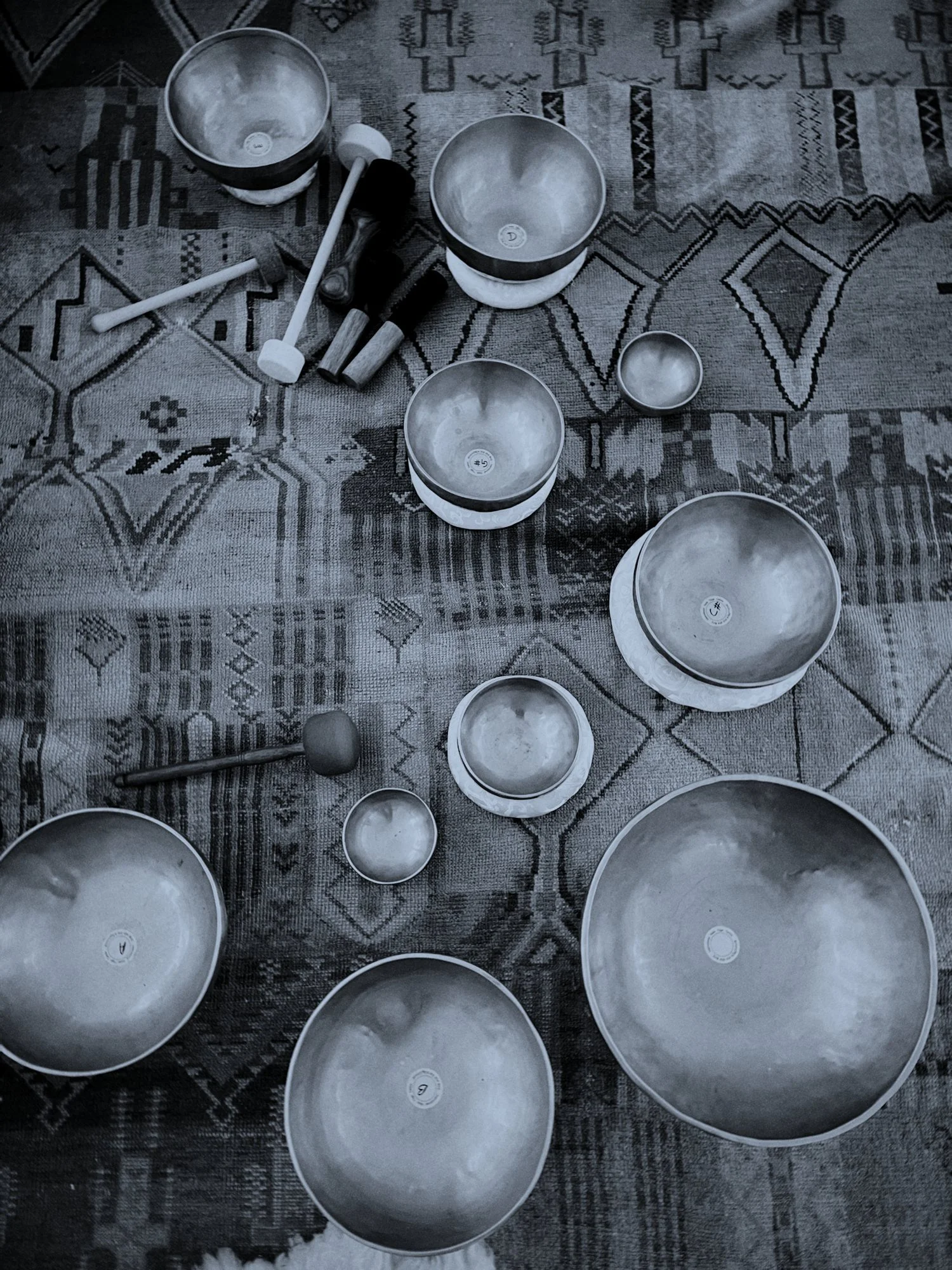
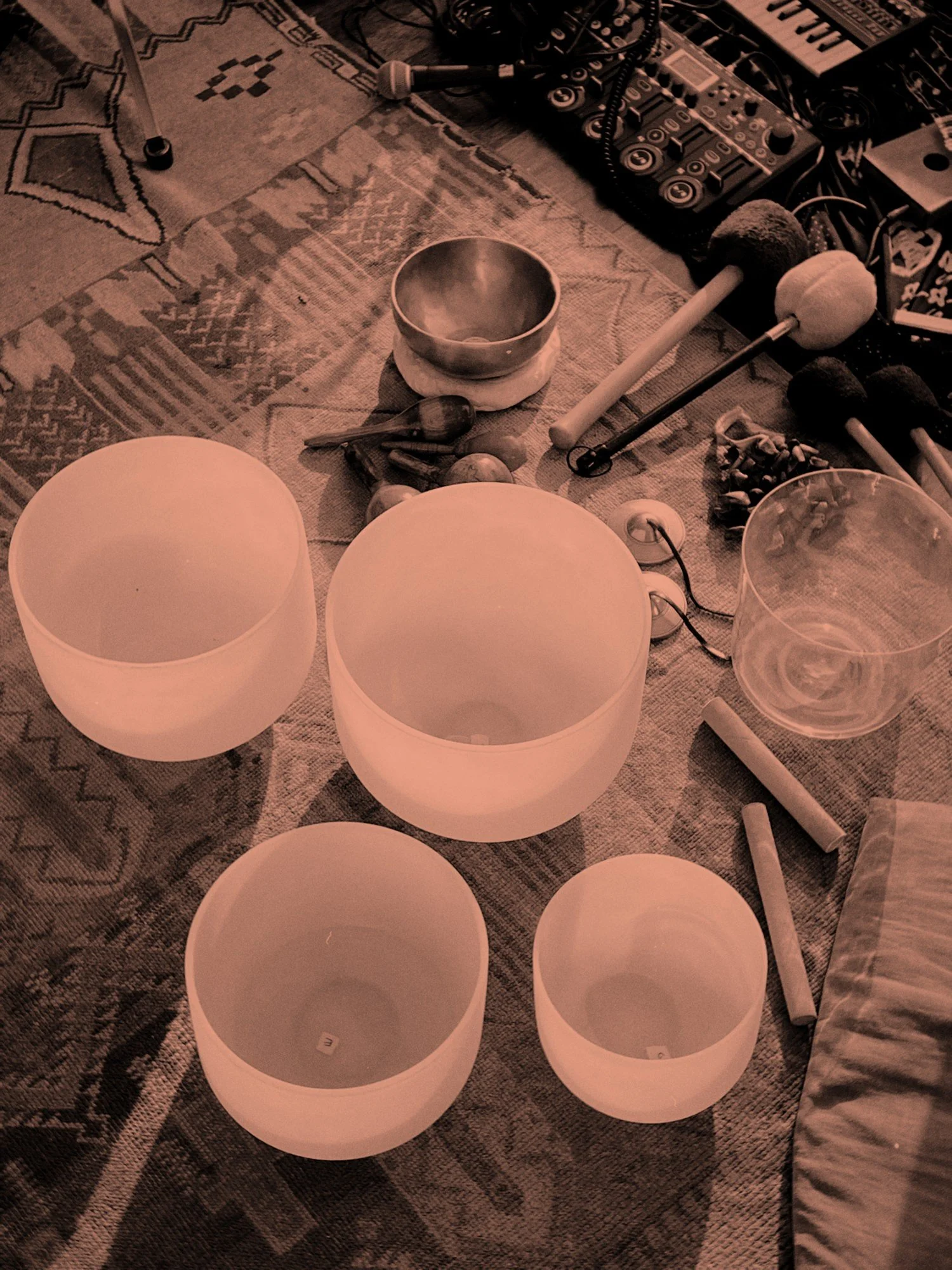
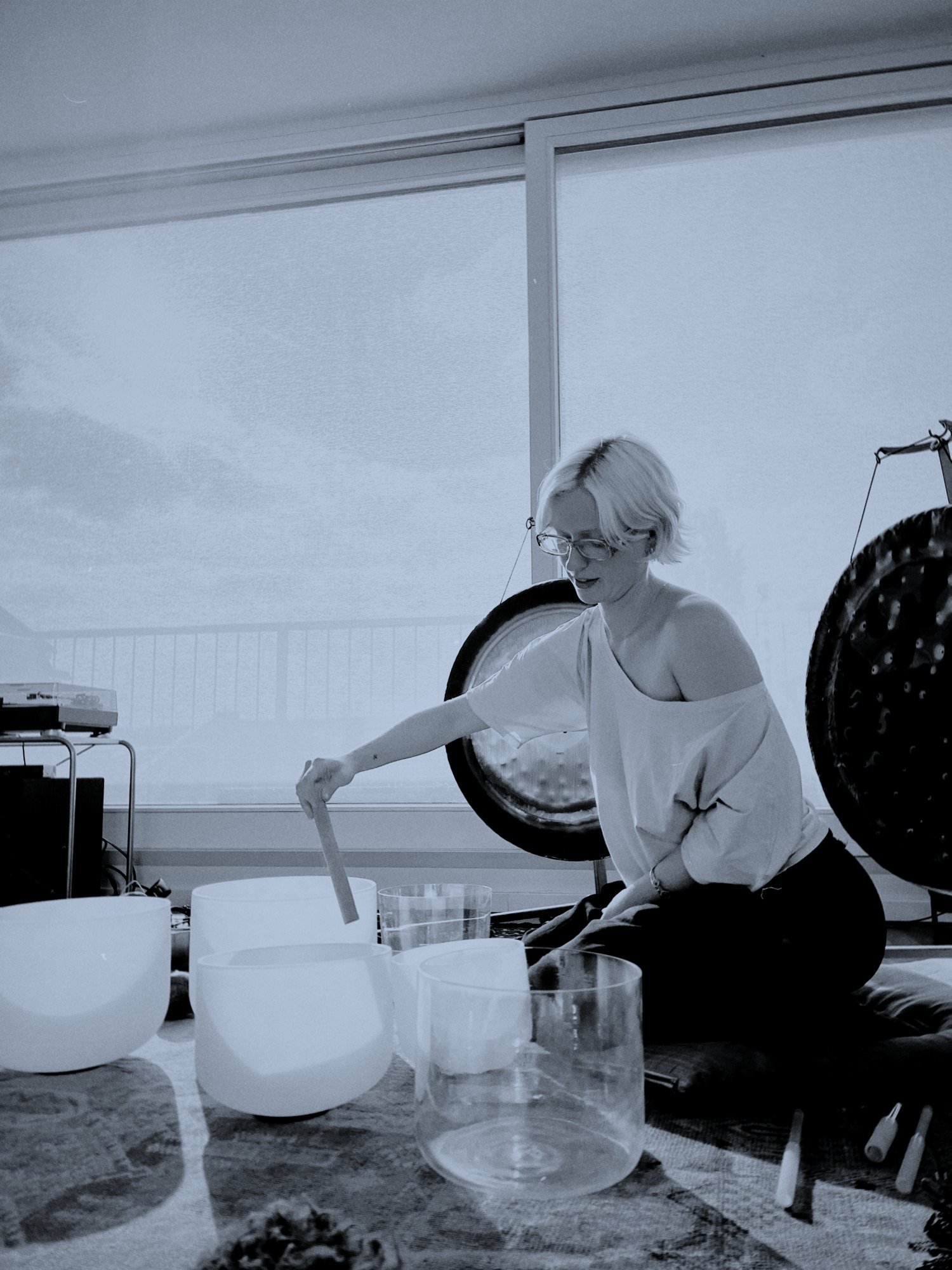
I work with a rotating set of crystal singing bowls, planetary and bronze gongs, tuning forks, and overtone-rich organic instruments. I blend these with layered vocal work, guided meditation, and live electronic processing.
I respect traditional ritual and ancestral sound practices. My own approach also draws on experimental sound art, ambient music, and somatic research. I think of myself as a composer of conditions.
care
People can enter vulnerable states in this work. I do not present myself as a healer or therapist, and I do not promise outcomes. Consent and confidentiality matter to me.
Wear comfortable clothes and eat lightly beforehand. Bring a blanket, an eye cover, and water if you like. Give yourself time afterward to rest. If you are pregnant, working with trauma, or managing a health condition, check in with your doctor first and tell me before the session.
upcoming eventstraining and background
Terramedus Certified Sound Therapist and Pedagogue. Sound facilitator training, Soundbath Center LA. Sounding Arts program graduate, Berlin School of Sound. Over 25 years as a working musician, singer, and producer. A long-term deep listening practice, and ongoing sonic art research around somatics and sound.
the portal
With Yasemin Vollmond I run The Portal, a series of experimental sound experiences in old churches and listening venues.
see The Portalgo deeper
Learn to facilitate, take an online course, or come to an event.
frequency facilitator trainingonline schoolevents